CASE FILE
PBSUCCESS: How the United States Overthrew Guatemala’s Government
The documentary record of the CIA operation that removed Jacobo Árbenz in 1954, and the political, economic, and Cold War conflicts that surrounded it.
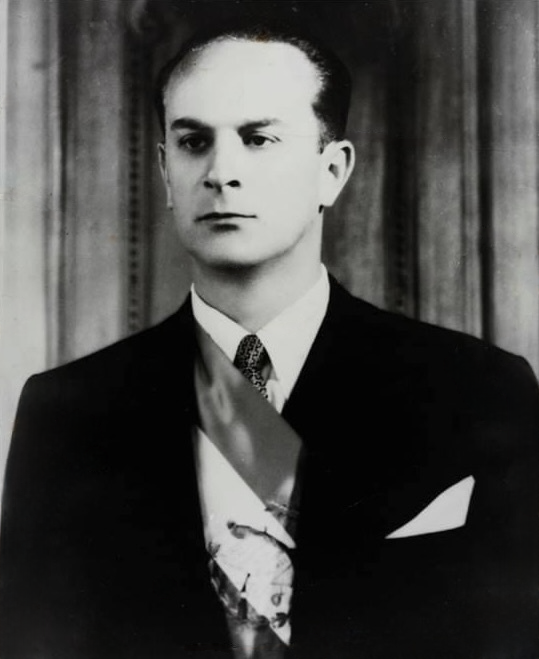
In June 1954, Guatemala’s elected government fell after a covert operation run by the United States Central Intelligence Agency. The operation, known as PBSUCCESS, combined political pressure, intelligence work, propaganda, military preparation, psychological warfare, and a small armed force operating from outside Guatemala. The decisive question is not whether Washington intervened. The surviving record establishes that it did. The harder historical question is how that intervention interacted with Guatemala’s internal political conflict, the land question, the military, private economic interests, and the wider Cold War.
Declassified records now make it possible to reconstruct the operation from inside. The U.S. State Department’s Foreign Relations of the United States documentary series describes its Guatemala volume as a documentary history of PBSUCCESS and notes that the underlying record includes CIA cables, internal memoranda, intelligence studies, State Department correspondence, embassy records, and presidential papers. The archive therefore allows the operation to be examined not only through later recollection, but through the contemporary communications of the officials who planned and executed it.
The Guatemala that Arbenz inherited
Guatemala entered the 1950s carrying a deeply unequal political and economic structure. The revolution that began in 1944 had ended the long dictatorship of Jorge Ubico and opened a period of reform under presidents Juan José Arévalo and Jacobo Árbenz. Árbenz, elected in 1950, made agrarian reform central to his administration.
The 1952 agrarian reform law sought to redistribute unused portions of large estates to landless and land-poor farmers, with compensation based on declared tax values. The reform directly affected the United Fruit Company, a U.S. corporation with extensive land, transport, and communications interests in Guatemala. The company had powerful connections in Washington. Secretary of State John Foster Dulles had previously been a lawyer at the firm Sullivan & Cromwell, which represented United Fruit, while his brother Allen Dulles was CIA director.
These relationships became part of the historical debate over motive. They do not, by themselves, establish that PBSUCCESS was simply an operation conducted for a corporation. The documentary record instead shows several overlapping U.S. concerns. American officials increasingly treated the Guatemalan government as a Cold War security problem, focused on the influence of the Guatemalan Communist Party, labor organizations, arms imports from the Soviet bloc, and the possibility that Guatemala could become a base for communist influence in the hemisphere.
Washington decides on covert action
The move toward intervention predates the final coup by years. In 1951 the United States considered PBFORTUNE, an earlier plan to remove Árbenz. PBSUCCESS followed as the Eisenhower administration developed a more extensive covert program. The State Department’s documentary history records that the Operations Coordinating Board authorized the CIA to proceed with PBSUCCESS on a high-priority basis, with a budget of about $3 million.
The operation was designed around an important assumption: a relatively small rebel force could become politically decisive if Guatemalan military officers could be persuaded that Árbenz could not survive. CIA planners therefore worked simultaneously on several fronts. They built a force under Carlos Castillo Armas, cultivated contacts inside the Guatemalan government and army, prepared propaganda, developed clandestine communications, planned sabotage, and sought to create the impression that a much larger uprising was underway.
An April 1954 CIA position paper is particularly revealing. It described PBSUCCESS as a plan whose basic purpose was to overthrow the Árbenz regime. It also acknowledged that the United States would likely be accused of sponsoring activities against the government. Other planning documents show a program aimed at persuading or inducing important elements of the army and executive apparatus to defect.
The communist question
The Eisenhower administration publicly presented Guatemala as a communist threat. There was a factual basis for concern about communist political influence. The Guatemalan Communist Party, the Partido Guatemalteco del Trabajo, had influence within organized labor and maintained relationships with the Árbenz government. In May 1954, a Swedish ship carrying arms manufactured in the Soviet bloc arrived in Guatemala after the government had struggled to obtain weapons from Western suppliers.
But the documentary record also shows that U.S. intelligence officials were trying to measure the actual scale of communist power, rather than simply assuming that Guatemala was already a Soviet satellite. An April intelligence assessment asked specifically about the strength of the communists and the likelihood of continued communist influence. That distinction matters. The presence of communist actors and Soviet-bloc weapons is documented. The larger proposition that Guatemala was about to become a Soviet-controlled state was an assessment and policy judgment, not a fact established independently of the administration’s interpretation.
The operation enters its final phase
By early 1954, PBSUCCESS was no longer a contingency plan. CIA records show detailed operational preparation, including intelligence penetration, communications, defection efforts, propaganda, and logistical support. The operation’s planners understood that the rebel army alone was unlikely to defeat Guatemala’s regular forces in a conventional campaign.
That calculation shaped what happened after June 18, when Castillo Armas’s force crossed into Guatemala from Honduras. The invasion initially produced inconclusive fighting. The CIA station reported that Guatemalan soldiers were frightened by air attacks and increasingly uncertain about their commanders. CIA aircraft conducted strikes, while psychological warfare and radio broadcasts exaggerated the size and momentum of the rebel force.
The surviving cables reveal the operation’s improvisational character. On June 23, a CIA station report described soldiers who were terrified by the prospect of further bombardment and suggested that some commanders might turn against Árbenz. On June 28, another cable from the station urgently recommended additional bombing to pressure a rival junta. These were not retrospective descriptions. They were operational communications written while the crisis was unfolding.
Why Árbenz resigned
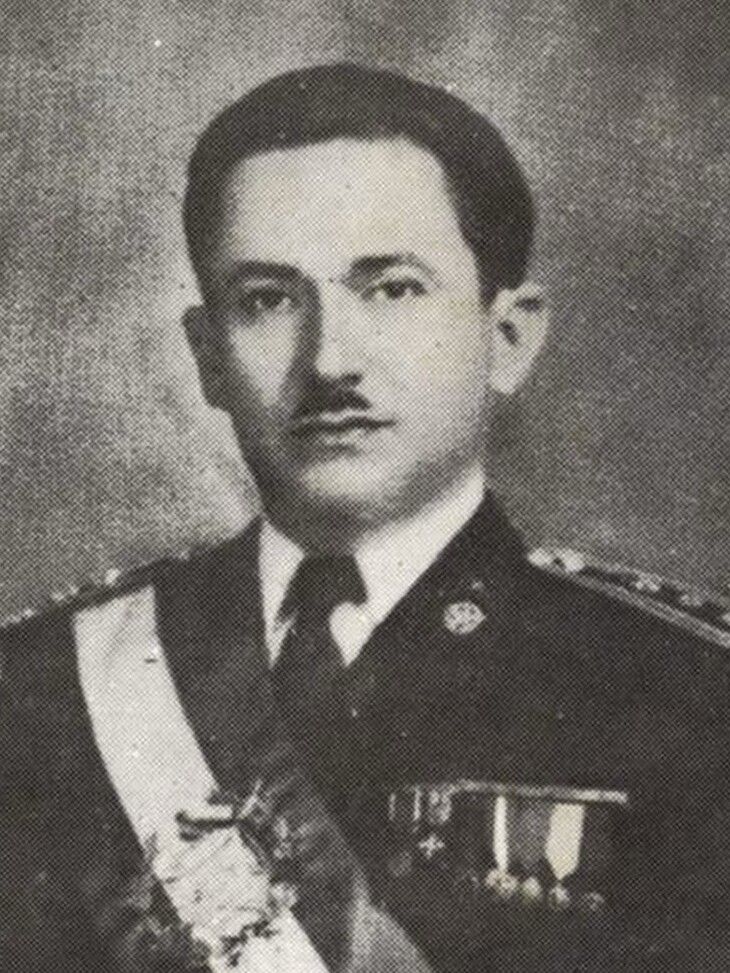
On June 27, Árbenz resigned. He announced that he was stepping aside to prevent a wider bloodshed and transferred authority to Colonel Carlos Enrique Díaz. The military and political situation then changed rapidly. Díaz’s junta lasted only briefly. Castillo Armas ultimately emerged as the new head of government.
The record does not support a simple picture in which a tiny invading army marched into Guatemala City and defeated the government in a conventional battle. The CIA’s own retrospective historical account says the rebel force became effective in combination with diplomatic and propaganda pressure, airstrikes, and clandestine contacts with regular army officers. The psychological effect was central to the operation because its planners were trying to convince military and political actors that Árbenz could not prevail.
What happened after the coup
The removal of Árbenz did not end the political conflict. Castillo Armas reversed major elements of the reform program, returned expropriated land in numerous cases, and pursued opponents of the new order. The political opening of the 1944–1954 period gave way to a much narrower political system.
The longer historical consequences cannot be reduced to the coup alone. Guatemala subsequently experienced military governments, armed insurgency, counterinsurgency, political repression, and a civil war that lasted until 1996. The later violence had multiple causes and actors, and the 1954 intervention should not be treated as the sole explanation for every subsequent development. It is, however, a documented turning point in the country’s modern political history.
What the documents establish
The evidence establishes several points with unusually strong documentary support. The CIA planned and directed PBSUCCESS. Washington authorized the operation. The United States trained and supplied Castillo Armas’s forces. CIA personnel cultivated Guatemalan military and political contacts. The operation used propaganda and psychological warfare. CIA aircraft conducted attacks during the final crisis. American officials participated in the negotiations that followed Árbenz’s resignation. The operation succeeded in removing an elected government.
What remains contested
Several questions require more careful treatment. The extent to which private corporate interests independently drove policy remains debated because economic interests, Cold War strategy, and domestic Guatemalan politics overlapped. The seriousness of the communist threat is also interpreted differently by historians. Communist influence inside Guatemala was real, but claims about an imminent Soviet takeover depend partly on how intelligence evidence and political judgments are weighed.
Another question concerns causation. It is possible to document American intervention without treating Guatemala’s internal political conflicts as irrelevant. Árbenz had opponents inside the country, including sections of the military, conservative political groups, landowners, and others who objected to his reforms. The intervention altered the balance among those actors. It did not create every conflict that existed before it.
The record
The Guatemala file is unusually rich because the surviving record contains the operation from inside. CIA cables show planners discussing the overthrow itself, the recruitment of military officers, propaganda, sabotage, air operations, security failures, and the final negotiations. The State Department’s documentary edition also identifies the underlying CIA collection by its archival job number and notes that it contains PBFORTUNE, PBSUCCESS, PBHISTORY, internal memoranda, cable traffic, intelligence studies, and correspondence.
That archive changes the nature of the historical question. The central fact is no longer whether foreign intervention occurred. The documents answer that directly. The deeper investigation is how an elected government became the target of a covert operation, how the operation converted a limited military challenge into a political collapse, what assumptions drove Washington’s decisions, which Guatemalan actors participated, and how the consequences unfolded afterward.
Timeline
1944
Guatemalan Revolution begins
The overthrow of Jorge Ubico opens a reform period that continues under Juan José Arévalo and later Jacobo Árbenz.
1950
Árbenz elected president
Jacobo Árbenz wins the presidency and makes economic and agrarian reform central to his administration.
1952
Agrarian reform enacted
Decree 900 begins redistribution of unused portions of large estates, affecting major landholders including United Fruit.
1953
PBSUCCESS expands
The Eisenhower administration authorizes the CIA to proceed with the covert operation at high priority.
May 1954
Soviet-bloc arms arrive
A Swedish ship carrying Czechoslovak arms reaches Guatemala, intensifying U.S. concerns about communist influence.
June 18, 1954
Castillo Armas crosses the border
The CIA-backed rebel force enters Guatemala from Honduras.
June 23, 1954
Psychological pressure intensifies
CIA operational reporting describes fear among Guatemalan soldiers and the effect of air attacks.
June 27, 1954
Árbenz resigns
Árbenz leaves office as the military and political crisis reaches its decisive phase.
June 28–30, 1954
New government consolidated
Negotiations among Guatemalan officers and Castillo Armas proceed with American diplomatic and intelligence involvement.
1954 onward
Political order transformed
The new government reverses major reforms and begins a period of intensified political repression and military rule.
Primary sources
Foreign Relations of the United States, 1952–1954, Guatemala: Sources and archival description
U.S. Department of State, Office of the Historian
The documentary volume describes itself as a history of PBSUCCESS and identifies the CIA, State Department, embassy, presidential, and National Archives records used.
Memorandum: PBSUCCESS position paper
Central Intelligence Agency
CIA position paper describing the operation, its objectives, intelligence assets, and the anticipated problem of U.S. responsibility becoming known.
Telegram from CIA Station in Guatemala to PBSUCCESS Headquarters
Central Intelligence Agency
Contemporary operational reporting on Guatemalan soldiers, air attacks, morale, and the possibility of military defection.
Telegram from CIA Station in Guatemala to PBSUCCESS Headquarters
Central Intelligence Agency
Operational cable recommending further bombing during the negotiations following the breakdown of an initial junta arrangement.
Telegram from the CIA to PBSUCCESS Headquarters
Central Intelligence Agency
Headquarters message congratulating the PBSUCCESS team after the overthrow and acknowledging the operation’s difficulties.
CIA FOIA Guatemala Collection: PBSUCCESS documents
CIA FOIA Reading Room
Declassified CIA records from the Guatemala collection, including PBSUCCESS planning and operational material.
Operation PBSUCCESS: The United States and Guatemala, 1952–1954
CIA Center for the Study of Intelligence
Nicholas Cullather’s official CIA historical study, later declassified and used as a guide to the operation’s documentary record.